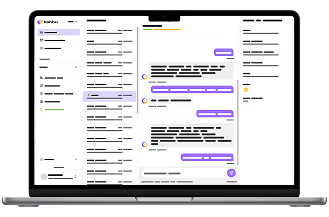
AI assistant for customer support
I answer instantly from your content and show the source, check status in your connected systems and hand the conversation to an operator with its history when needed. On your website, in chat and on the phone — 24/7 and in your customer's language.
Typical pain
Support spends days on the same answers, customers get inconsistent info, and escalations arrive without context. Classic chatbots can link to FAQ — they can’t check an order or open a ticket.
- Repeating “where is my order / how do I return this?” questions
- Different answers depending on who is on chat
- Escalations with no history — operators start from zero
- Outside business hours: silence or a static template
What I handle
- FAQ and policies with citations into approved sources
- Order, ticket or account status straight from your system (API)
- Collect details with in-chat forms
- Create helpdesk tickets via a connection
- Live-chat handoff with the full conversation history
- Answers 24/7 in the customer's language — in chat and on the phone
Outcomes to expect
Self-serve clears most repeating questions without waiting for a human.
Operators only get cases that really need a person — with the whole conversation.
Customers see sources and progress: knowledge search, system check, handoff.
A typical conversation
I search knowledge
First I use your website, docs, Drive, or RSS and answer with a citation — I don’t invent policies.
I verify in your system
Via a custom API I check order, ticket, or account status. Numbers come from the system, not the model.
I collect structured data
If something is missing, I show an in-chat form — structured, not free text.
I finish or hand off
I open a ticket, close self-serve, or pass live chat to an operator with history.
Concrete scenarios
“Where is my shipment?”
The customer provides an order number. I check the status directly in your shop or warehouse system and answer with real data. If the parcel is stuck, I suggest the next step or open a claim right away.
Return or claim
I explain the process from your approved returns policy (with citation), collect reason via a form, and open a helpdesk ticket through the API.
When a person is needed
Complex complaints, legal exceptions, or sensitive accounts go to an operator — with the full conversation so they don’t re-ask.
“How do I change my billing details?”
I explain the process from knowledge (with a citation) and, if it needs a system action, guide to a form or a verified self-serve step via API.
A customer calls outside business hours
In the evening or on a weekend, the assistant answers — not a voicemail machine. It checks order status via API and, if a human is really needed, offers a callback or a contact for the morning.
A return dictated over the phone
The customer doesn't want to fill in anything — they say the return reason and order number out loud. I capture the details from the call and open the return via API right away.
Example connections
Example connections via your API or MCP. Set them up once in admin and assign them to the assistant — they work in chat and on the phone.
Order status, create ticket, update status
Current policies, playbooks, escalation matrix
Address, delivery preference, confirm details
Pass to a specialist with the full conversation history
Enrich contact / case notes
How to handle returns, claims, pricing exceptions
Useful knowledge sources
Separate “what I’m allowed to say” (knowledge base) from “what I verify in a system” (API). Prefer website or Drive sync so policies don’t go stale.
- FAQ, returns policy, shipping, service pricing
- Product help / onboarding guides
- Escalation rules (when to hand off)
- Website, Drive, or RSS changelog sync
Today and coming soon
Today: website, live chat and phone. Coming soon: e-mail, WhatsApp and Instagram — with the same knowledge and connections, no second bot to build.
Try support on your data
Enter your website address and in minutes you'll see how I answer — with citations. Set up API connections later in admin.